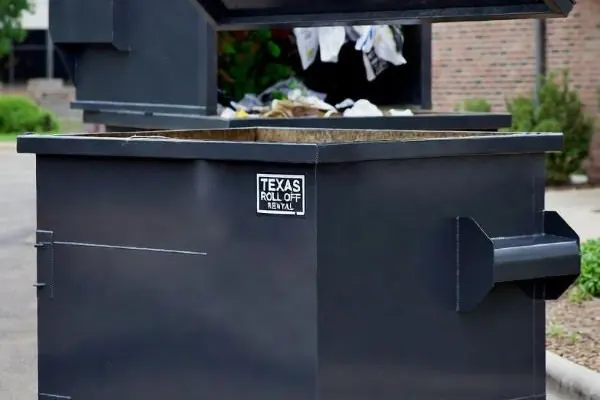
Start with the spot
Before you call, walk outside and decide where the container will go. The driveway is the usual answer. Check:
- Length and width. Most roll-offs are about 8 feet wide; a 20-yard is often 20 feet or more long. Measure.
- Truck approach. The truck needs a straight line to back in, often 60 feet or more for larger sizes, plus the width of the driveway apron.
- Overhead clearance. The truck tilts its bed to slide the container off. Look for power lines, cable lines and low tree limbs.
- Door access. If you plan to walk items in through the end door, leave space to open it.
- Ground. Pavement is best. Grass and soil get soft after rain, especially on Texas clay.
Take a photo of the spot and send it to the provider. It helps them choose the right size and place it correctly.
Check your HOA and the city
A large share of Texas homes, especially in suburbs, are under HOAs or deed restrictions. Many limit how long a container may stay, some require approval, and some never allow street placement. Read the rules or call the management company before booking.
If the driveway will not work and the street is the only option, check with the city. Many Texas cities regulate objects in the street and may require permission. See Texas dumpster permit requirements.
Protect the driveway
A loaded roll-off is heavy, and its steel rails press on a small area. Concrete driveways usually handle it, but thin or old slabs can crack. Asphalt softens in Texas summer heat and can dent. Ask the provider to place boards or plywood under the rails, or put them down yourself before delivery. Most rental agreements make the customer responsible for surface damage.
Choose the size by weight as well as volume
Home projects often mix heavy and light debris. A kitchen remodel with tile floors and stone counters is heavier than one with laminate. A roof tear-off is heavy. A garage full of old furniture is light. Tell the provider what is coming out, and read the dumpster sizes guide.
Time it right
Book the delivery for the day loading starts, not days before. Line up helpers and plan to load in a few focused sessions. If you are waiting on a contractor, coordinate with their schedule. Most rentals include a set number of days; extra days cost more.
Load like a pro
- Put large, flat items on the bottom: doors, drywall sheets, plywood.
- Break down furniture and cabinets.
- Fill gaps with smaller debris and bags.
- Spread heavy items across the length of the container.
- Use the end door for heavy or awkward items, then close and latch it.
- Stop at the top rail. Overfilled containers may not be hauled.
Handle the items that need special care
Keep paint, chemicals, batteries, propane tanks and other hazardous items out. Ask before loading mattresses, tires, appliances or electronics, which may cost extra. Donate usable furniture and building materials. Recycle scrap metal. See what can you put in a dumpster.
Texas weather tips
- Heat. Load in the morning or evening in summer. Drink water and take breaks.
- Rain. Cover the container before rain. Wet debris weighs more and can cost more.
- Wind. In West Texas and the Panhandle, tarp the load to stop light debris blowing out.
- Storms. In hurricane season on the Gulf Coast, ask the provider about their storm policy and keep the container covered.
On pickup day
Call the provider when the container is full or the project is done, rather than waiting for the period to end; an early pickup frees up the driveway and, with some providers, avoids extra-day charges. Before the truck arrives, make sure nothing sticks out above the rails, the end door is latched, and the approach is clear of cars, trash bins and kids' toys. Remove any tarp unless the provider asks you to leave it on. After the truck leaves, check the driveway and photograph any marks while the details are fresh, then sweep up nails and screws, which are easy to miss and hard on tires. Keep the weigh ticket or invoice until you are sure the charges match the quote.
Keep neighbors happy
Let neighbors know a container is coming, especially if it may block part of the street or a shared drive. Keep the area tidy, and cover or lock the container overnight so others do not fill it with their junk, which you would pay for.
Common homeowner mistakes
The same few mistakes come up again and again. Ordering a 30-yard for a bathroom full of tile and then paying for overage. Booking the container for Monday when the contractor starts demo on Thursday. Leaving the car in the driveway on delivery morning. Letting a teenager's party crew, or a neighbor, add an old sofa and a tire. Forgetting to tell the HOA. Each one costs money or time, and each one is avoided with a five-minute check before the truck arrives.
Read the quote
Before booking, make sure the quote lists the size, rental period, extra-day rate, weight allowance, overage rate and any item surcharges. Typical market ranges are on our pricing page. Then call (512) 859-6546, and we will line up a local provider. For more on home projects, see residential dumpster rental.