The short version
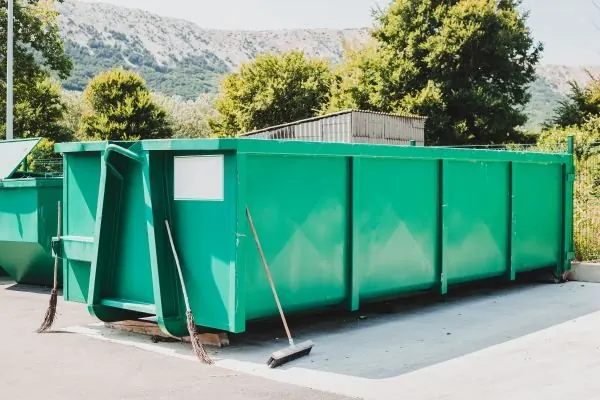
Roll-off dumpsters are measured in cubic yards of volume. The four sizes you will meet most in Texas are the 10, 20, 30 and 40-yard. Bigger containers are longer or taller, not wider; almost all are about 8 feet wide so they fit on a standard truck. But volume is only half the story. Every rental also carries a weight allowance, and with heavy debris you will hit that long before the container looks full. Choosing the right size means thinking about both.
The four common sizes
10-yard
The smallest common roll-off is about 12 to 14 feet long with low sides, often around 3 to 4 feet high. It holds roughly three to four pickup loads. It is the right choice for heavy debris: concrete, brick, block, tile, dirt, rock and roofing shingles from a small roof. It also suits small jobs like a single bathroom gut or a modest garage cleanout. Fixr's national cost data (2025, checked October 2026) puts a typical 10-yard week at $250 to $400, and lists a per-day figure of $25 to $80 for a 10-yard.
20-yard
The 20-yard is the most popular size for home projects. It is commonly 20 to 22 feet long with sides about 4 to 5 feet high, and holds roughly six to eight pickup loads. It covers a kitchen remodel, flooring through a house, a single-layer roof tear-off on many homes, or a full garage and attic clear-out. Fixr's figure for a typical 20-yard week is $275 to $450.
30-yard
The 30-yard has the same footprint as most 20s but taller sides, around 6 feet. It is the workhorse on new-home sites during framing and roofing, and it suits whole-house renovations and large estate cleanouts with bulky furniture. Because the sides are higher, loading heavy items over the top is harder; use the end door. Fixr's typical range is $300 to $750 a week.
40-yard
The 40-yard is about the same length again with sides around 8 feet high. It is meant for large volumes of light debris: commercial cleanouts, big framing jobs, packaging and demolition of light materials. It is a poor choice for heavy debris, which will exceed the weight allowance long before the container is full. Fixr's typical range is $350 to $900 a week.
Those figures are national market ranges, not our rates. Larger Texas metros with higher landfill fees tend toward the upper end. The full table, including extra days and overage, is on our pricing page; call (512) 859-6546 for an exact quote.
Weight: the limit people forget
Each rental includes a certain number of tons. The provider weighs the container at the landfill or transfer station, and anything over the allowance is billed per ton. Fixr lists overage at roughly $40 to $100 per ton. The truck also has a legal road weight, so a provider may refuse to haul a container that is far too heavy.
Rough guide to heavy versus light debris:
| Heavy (fills weight first) | Light (fills volume first) |
|---|---|
| Concrete, brick, block, pavers | Framing lumber offcuts |
| Dirt, rock, gravel, caliche | Furniture, mattresses (if allowed) |
| Tile, mortar, plaster | Cardboard, packaging |
| Asphalt shingles | Carpet and pad (dry) |
| Wet drywall, wet carpet | Insulation, plastic sheeting |
With heavy debris, pick a smaller container, or fill a larger one only partway, and ask what tonnage is included. With light debris, size up rather than paying for a second haul.
Matching size to job
| Job | Usual size |
|---|---|
| Bathroom gut | 10-yard |
| Concrete patio or driveway removal | 10-yard |
| Kitchen remodel | 10 or 20-yard |
| Single-layer roof, average home | 20-yard |
| Flooring through a house | 20-yard |
| Garage and attic cleanout | 10 or 20-yard |
| Whole-house estate cleanout | 20 or 30-yard |
| New-home framing and roofing | 30-yard, swapped as needed |
| Commercial cleanout, light materials | 30 or 40-yard |
On construction sites, the right answer changes from phase to phase. Our construction dumpster rental page shows a typical sequence.
Footprint and placement
All four sizes are about 8 feet wide, and the 20, 30 and 40 are often about the same length. The truck needs extra room in front of the spot to line up and tilt its bed, plus overhead clearance free of wires and limbs. Measure the spot, including the approach, before choosing a size. On a Texas summer day, put boards under the rails to protect an asphalt driveway.
If the container must go in the street, larger sizes are more likely to block traffic or sidewalks, and some cities have rules on placement in the right-of-way. See Texas dumpster permit requirements.
How to load more into any size
- Break down furniture and cabinets so they lie flat.
- Put flat, heavy pieces on the bottom and fill gaps with loose debris.
- Use the end door for heavy items, then close and latch it.
- Spread weight across the length of the container.
- Never load above the top rail.
When to call
If you are unsure between two sizes, call (512) 859-6546 and describe the job: the materials, how much of each and the space available. The provider sees thousands of loads and can usually tell you which size will work, and whether a swap is better than a bigger box. For what is allowed in any container, read what can you put in a dumpster.